GurugramDelhiWardrobesStorage
Wardrobe Designs for Gurugram and Delhi Apartments: Sliding vs Hinged, and How to Plan Storage
Sliding or hinged? Loft or no loft? A practical guide to planning wardrobes for Gurugram and Delhi apartments, from internal layouts to finishes and hardware.
By RAMAYA INTERIORS · · 3 min read
 Illustrative
In most Gurugram and Delhi apartments, bedrooms are compact and storage is never enough. A well-planned wardrobe can hold far more than an off-the-shelf one — if it is designed around what you actually store.
Start with what goes inside
Before thinking about finishes, list what each wardrobe needs to hold:
- Long hanging (dresses, kurtas, sarees on hangers) and short hanging (shirts, jackets)
- Folded clothes, sarees and suits
- A locker or a lockable drawer
- Bedding, blankets and pillows
- Luggage and seasonal items
- Shoes, bags and accessories
Then divide the wardrobe into sections for each. This internal plan matters more than the outside look.
Sliding or hinged shutters?
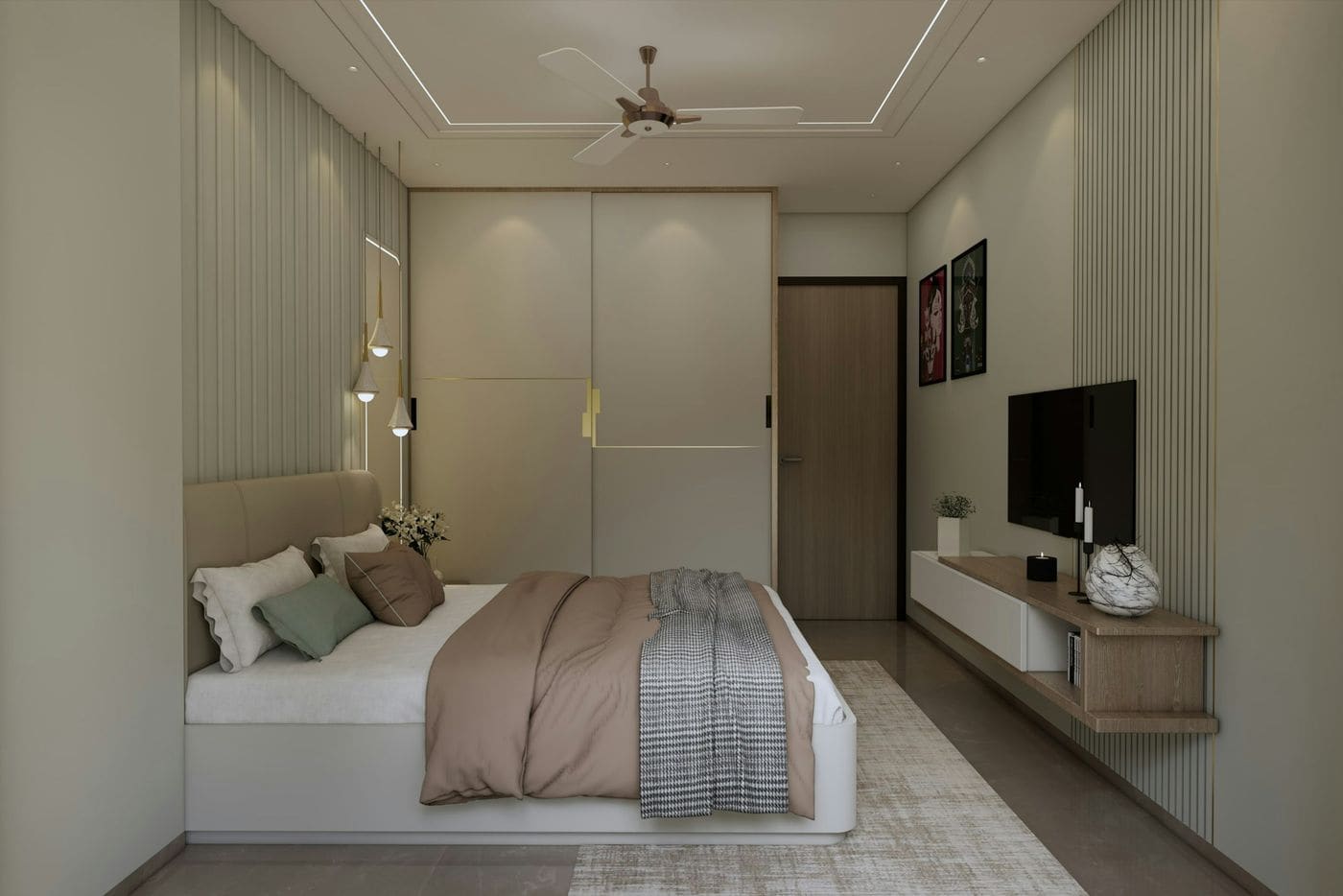
Sliding wardrobes suit narrow rooms because nothing swings into the walking space. They need a good-quality channel system, and only part of the wardrobe is open at a time.
Hinged wardrobes open fully, so you can see everything at once. They need clear space in front for the shutters to open, and good soft-close hinges.
Measure the room first: the distance between the bed and the wardrobe often decides this for you.
Use the full height
A floor-to-ceiling wardrobe with a loft uses wall space that would otherwise collect dust. Keep everyday items between waist and eye level, and put rarely used items in the loft.
Choose finishes and hardware wisely
- Laminate is durable and comes in many wood and solid finishes.
- Acrylic and lacquered glass give a glossy, modern look but show fingerprints.
- Mirror shutters make a small room feel larger.
- Profile handles or handle-less designs keep the look clean.
Hardware — hinges, sliding channels and drawer runners — decides how the wardrobe feels after a few years. Ask for brands and types to be named in the quotation.
Watch for moisture
Walls shared with bathrooms can be damp in the monsoon. Check them before installation and use a suitable board and a gap or barrier between the wall and the wardrobe.
Internal layout ideas that work
- Two levels of short hanging in one section doubles the space for shirts and tops.
- A section of long hanging for dresses, kurtas and coats — usually one is enough.
- Pull-out trays for folded clothes are easier to use than deep fixed shelves.
- A saree or trouser pull-out keeps them neat and wrinkle-free.
- An internal drawer with a lock for valuables and documents.
- A mirror on the inside of a shutter saves wall space in small rooms.
- Lighting inside the wardrobe — a simple sensor strip helps find things at night.
Kids' rooms and guest rooms
In children's rooms, keep the lower sections open or easy to reach so children can put their own things away, and add adjustable shelves so the wardrobe grows with them. Guest rooms need less hanging space and more shelves for bedding and luggage; a smaller wardrobe with a generous loft is often the practical choice.
Questions to ask before you approve
- Is the internal layout drawn section by section, with dimensions?
- Which board is used for the carcass and shutters, and what thickness?
- Which brand of hinges, channels and handles is included?
- How will the wardrobe be fixed to the wall and ceiling?
- What finish is used on the inside of the wardrobe?
- How long will fabrication and installation take after approval?
A wardrobe is something you open every day for years, so it is worth getting these details right before it goes into production.
Planning wardrobes?
RAMAYA INTERIORS designs wardrobes and storage from the inside out and measures every wall on site. Request a quotation and we will plan the internals with you before fabrication.
Frequently asked questions
Is a sliding wardrobe better than a hinged one?
Sliding wardrobes save space in narrow rooms because the shutters don't swing out. Hinged wardrobes give full access to the inside and are usually simpler to maintain. The room width decides more than style.
How deep should a wardrobe be?
Wardrobes are commonly around two feet deep so hangers fit comfortably. The final depth should be decided after measuring the room and checking walking space in front.
Should the wardrobe go up to the ceiling?
Floor-to-ceiling wardrobes with a loft use the full wall height and avoid dust collecting on top. Lofts are useful for luggage and seasonal items.